2017
Task-Led Navigation for Digital Banking
Barclays was investing heavily in digital self-serve to reduce contact centre volume and improve customer satisfaction. Navigation organised around products was working against both goals — increasing customer effort, suppressing task success, and driving calls that should have been self-served.
I initiated a task-led navigation redesign, reframing the experience around customer goals. The framework was validated through data and later adopted across multiple banking segments.
ROLE
Lead experience designer
Self-initiated initiative
TEAM
Head of Digital Experience (Business Banking)
Design leadership
Engineering partners
IMPACT
• ~2× improvement in task success in navigation testing
• +22% increase in content discoverability
• Navigation framework adopted across multiple banking segments
CHALLENGE
Navigation built for products, not customers
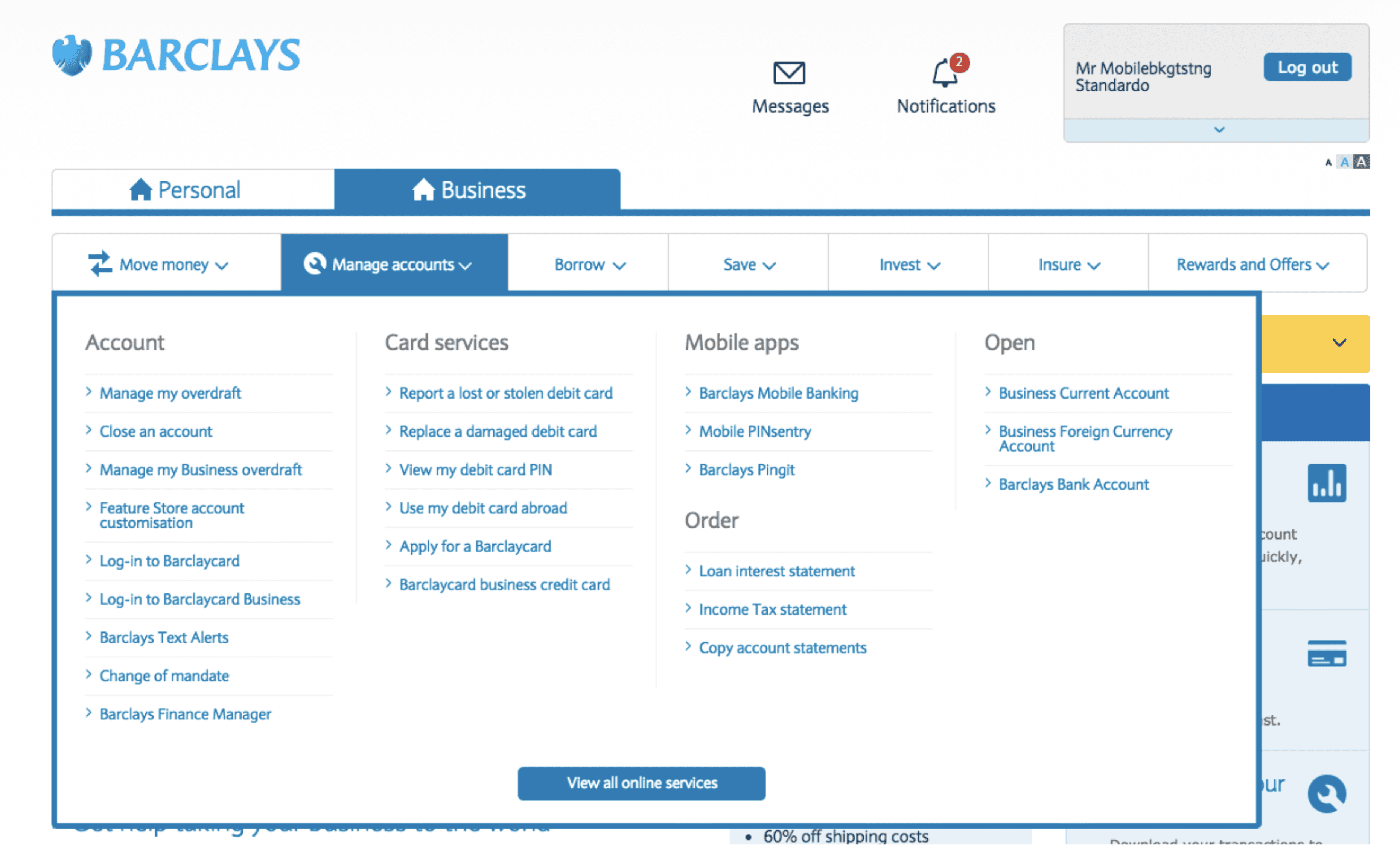
Product-led navigation misaligned with customer task demand
01
88% of activity
Customers primarily come to move money and manage accounts.
02
5% of clicks
Promotional and secondary product tabs received minimal usage.
03
25% workaround behaviour
Customers relied on “View all online services” to bypass the primary navigation.
04
Inconsistencies across devices and customer segments
reflected internal silos, with no shared navigation model.
SOLUTION
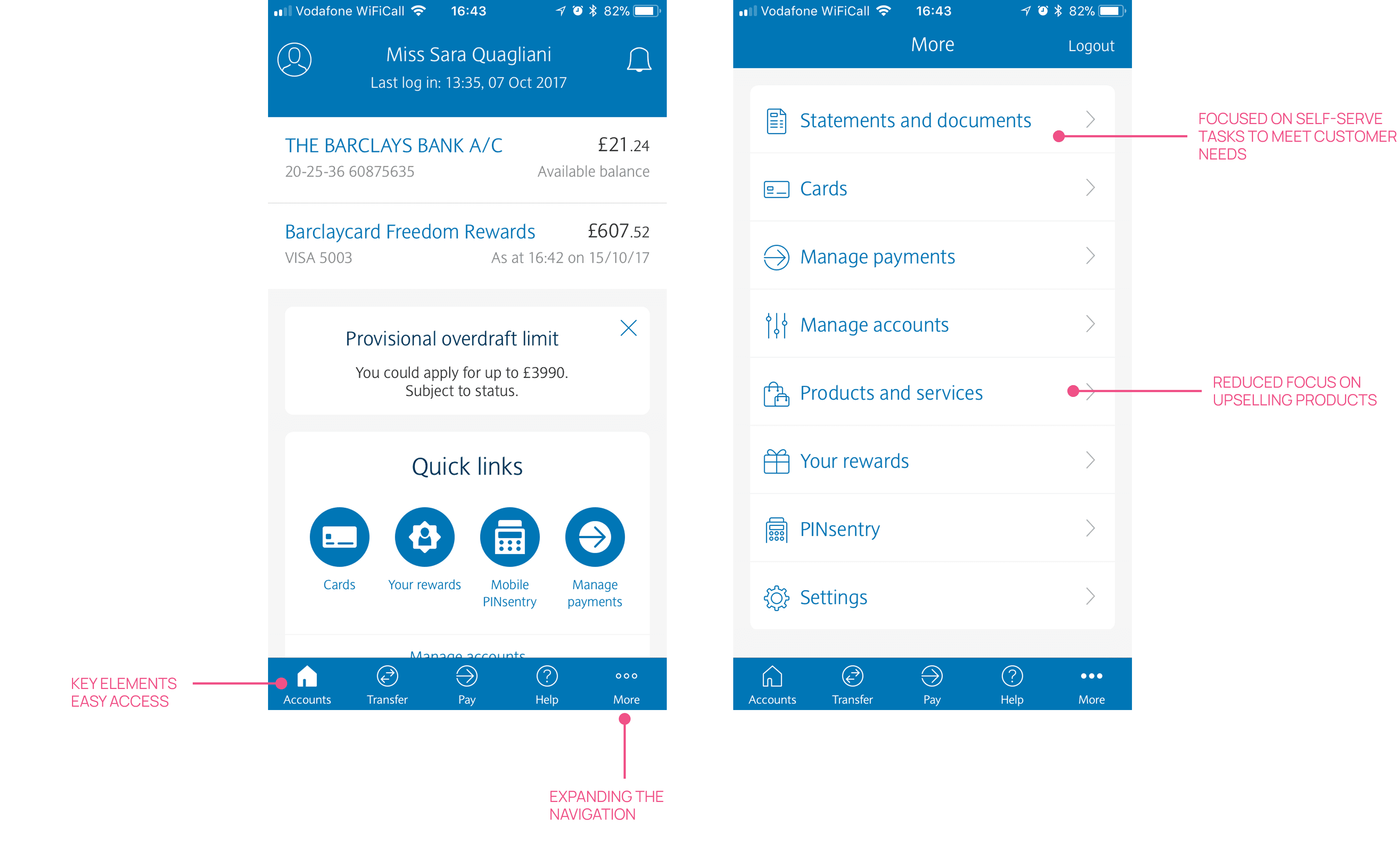
We redesigned the navigation as a task-led framework rather than product-led menus.
The solution introduced a single, consistent model that adapts across customer segments and works clearly on mobile and desktop.
01. Shift from product menus to a task-led navigation model
We reorganised the navigation around the core tasks customers came to complete, replacing product-led categories with a clear, predictable hierarchy. This reduced cognitive load, improved findability, and created a structure customers could rely on.
What changed
Core customer tasks surfaced at the top level
Clear, consistent hierarchy across the navigation
Secondary services grouped and accessed predictably
02. One navigation framework, adapted by segment and device
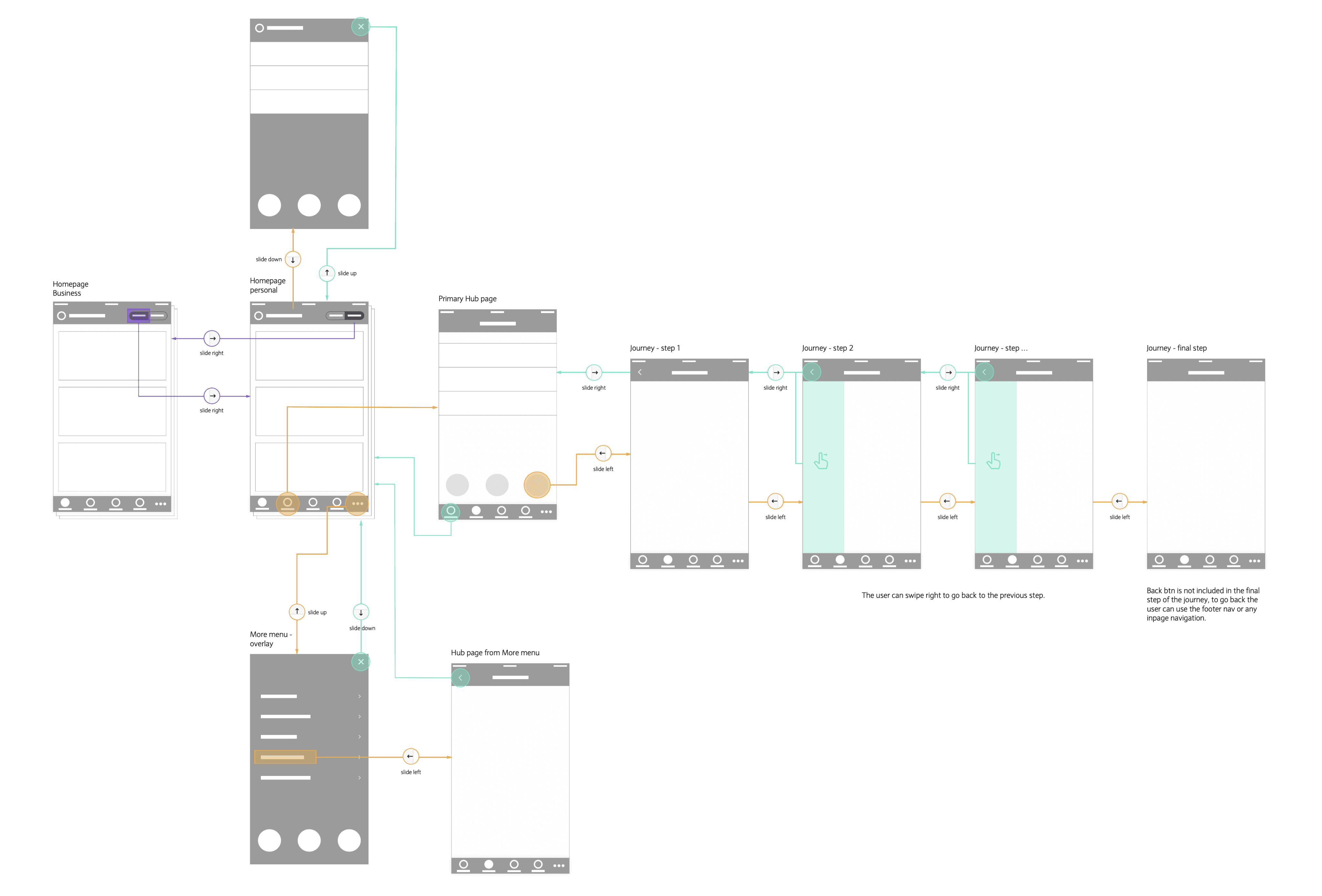
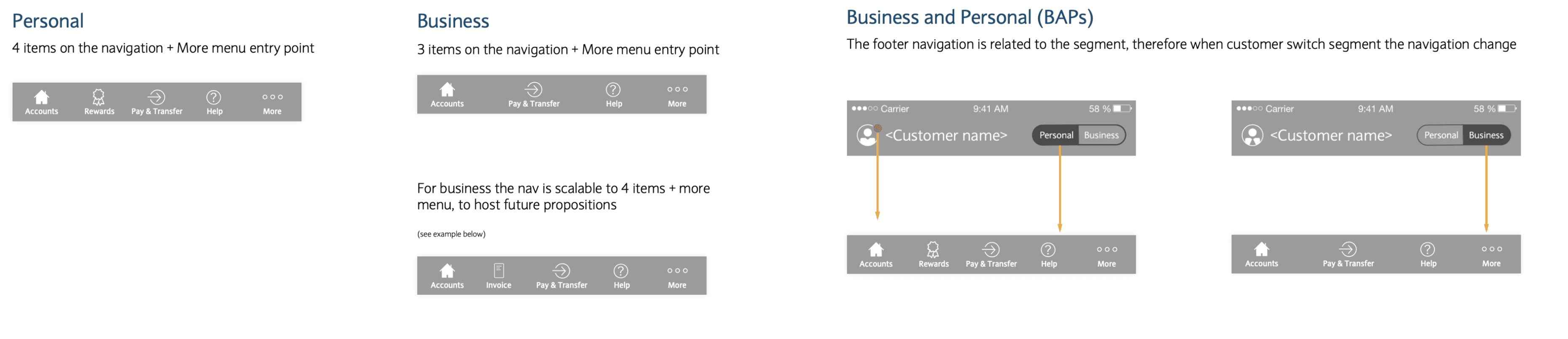
A single navigation framework was applied across Personal and Business customers and translated consistently across mobile and desktop. The underlying structure stayed the same, while task emphasis adapted by context to support multi-account customers and future services.
What this enabled
Consistent experience across segments
Predictable behaviour on mobile and desktop
Scalable framework for future services
IMPACT & RESULTS
Navigation clarity improved task success and reduced customer effort
Reframing navigation around customer tasks removed friction at the structural level — reducing the effort required to complete everyday banking tasks and directly supporting self-serve adoption.
The redesign doubled task success in testing and increased content discoverability by 22%. The framework was adopted across multiple banking segments — not as a one-off fix, but as the shared navigation model for the platform, validated through Treejack testing and navigation analytics.
Make a payment

View last statement

Report lost /stolen card

Edit payee details

Validated through Treejack testing and navigation analytics.
LEARNING
This self-initiated initiative reinforced the importance of pairing intuition with data to drive real product impact.